> For the complete documentation index, see [llms.txt](https://xspence.gitbook.io/little_ledger/llms.txt). Markdown versions of documentation pages are available by appending `.md` to page URLs; this page is available as [Markdown](https://xspence.gitbook.io/little_ledger/getting-started/micro_ledger.md).
# Quickstart - Micro\_Ledger
Welcome to the Little\_Ledger Micro\_Ledger Getting Started Guide!
Ready to take blockchain on the go? The Micro\_Ledger is your wearable gateway to the XRP Ledger and Xahau Network, fusing the Internet of Things with the Internet of Value in a sleek, portable design. With vibrant audio alerts, dazzling visual displays on its 0.96" OLED screen, and subtle haptic feedback, this device brings real-time blockchain data to you on a lanyard making it tangible, interactive, and personal!
Built with a Seeed Studio Xiao ESP32 S3, a 900mAh battery, and open-source code from our ESP32-XRPL repository [GitHub](https://github.com/Handy4ndy/ESP32-XRPL/tree/main/Little_Ledger), the Micro\_Ledger empowers you to monitor transactions, learn IoT programming, and contribute to the XRPL/Xahau ecosystems.
Whether you’re a developer crafting custom apps or a blockchain enthusiast staying connected, this guide will get you started fast.
***
**Set Up Your Environment**
The Arduino Integrated Development Environment (IDE) is an open-source, user-friendly platform designed for programming microcontrollers, offering a simple interface for writing and uploading code with support for C and C++.
Let’s get your Micro\_Ledger ready to roll! Follow these steps to set up your software and hardware environment.
Step 1: Install Arduino IDE
1. Download and install the Arduino IDE from [arduino.cc](https://www.arduino.cc/en/software).
2. Open the IDE and prepare to configure it for ESP32.
Step 2: Add ESP32 Board Support
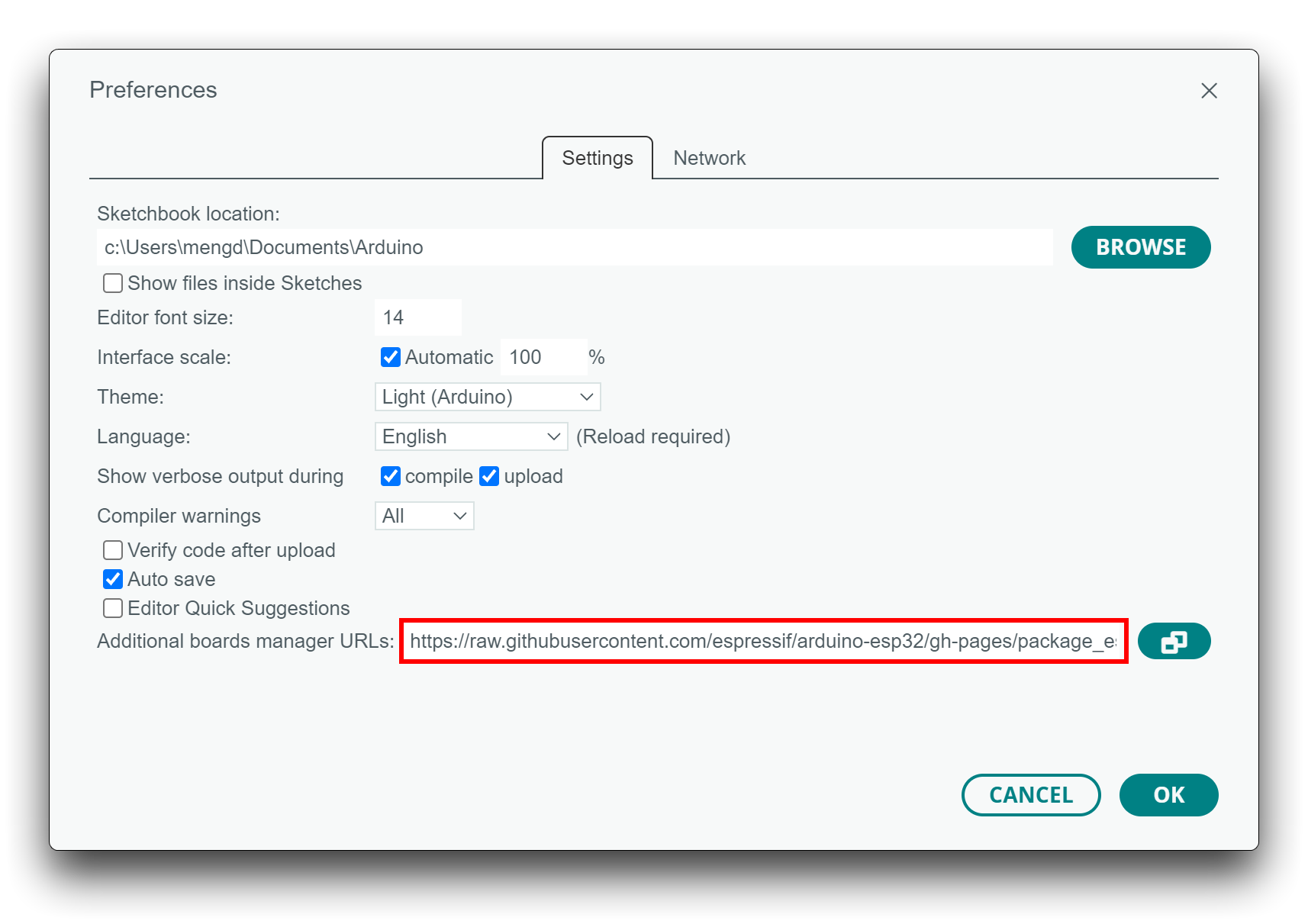
1. Go to File > Preferences.
2. In Additional Board Manager URLs add
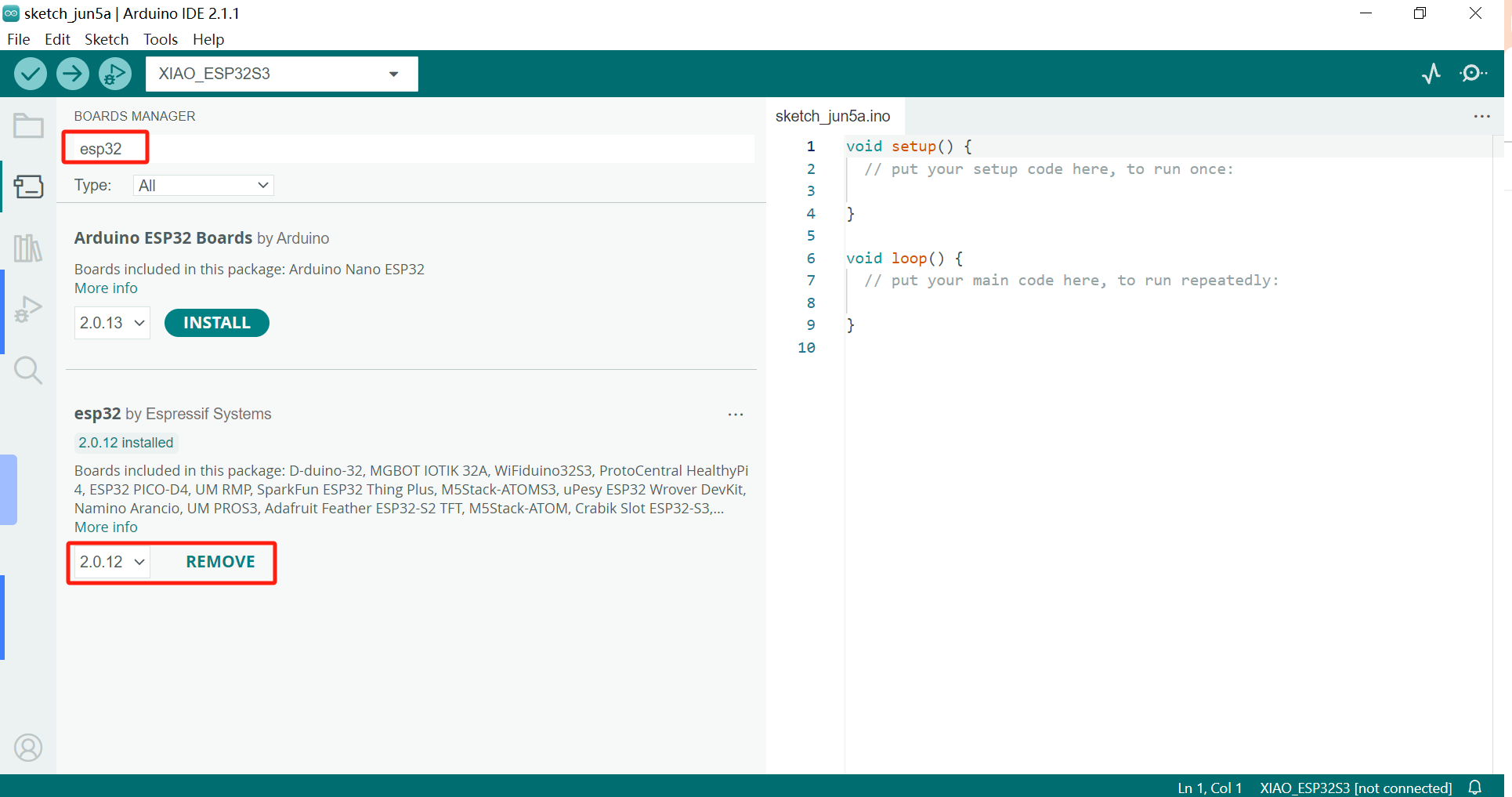
3. Navigate to Tools > Board > Boards Manager, search for “ESP32,” and install the esp32 package by Espressif Systems.
Step 3: Install Required Libraries
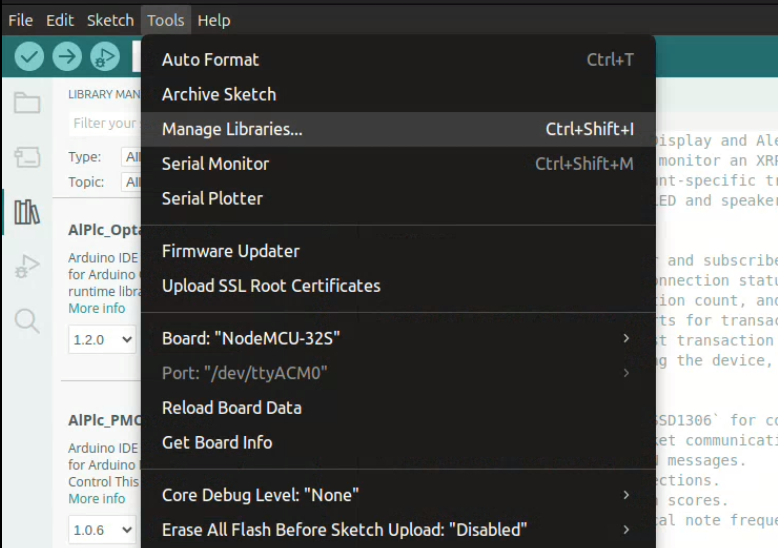
1. Go to Tools > Manage Libraries.
2. Install the libraries:
* WebSockets (by Markus Sattler)
* ArduinoJson (by Benoit Blanchon)
* Adafruit\_GFX\_Library (by Adafruit)
* Adafruit\_SSD1306 (by Adafruit)
* Preferences (by Volodymyr Shymanskyy)
Step 4: Install USB-to-Serial Drivers
Your ESP32 (NodeMCU-32S) needs a USB-to-serial driver to communicate with your computer. The driver depends on your OS and the ESP32’s chip (CP2102 or CH340/CH341).
* Windows:
* Install the driver for your ESP32’s chip:
* CP2102: [Silicon Labs CP2102 Driver](https://learn.sparkfun.com/tutorials/how-to-install-ch340-drivers#drivers-if-you-need-them)
* CH340/CH341: [WCH CH340 Driver](https://learn.sparkfun.com/tutorials/how-to-install-ch340-drivers#drivers-if-you-need-them)
* Check for a COM port in Arduino IDE under Tools > Port.
* macOS:
* CP2102: Usually built-in (Catalina+); no driver needed.
* CH340/CH341: Install from [here](https://github.com/adrianmihalko/ch340g-ch34g-ch34x-mac-os-x-driver).
* Allow the driver in System Settings > Security & Privacy if prompted.
* Look for /dev/cu.usbserial-\* in Tools > Port.
* Linux:
* Most distributions support CP2102/CH340 natively.
* Add your user to the dialout group
* ```
sudo usermod -a -G dialout $USER
```
* Log out and back in.
* Look for /dev/ttyUSB0 in Tools > Port.
* If the port doesn’t appear, use dmesg to troubleshoot.
Pro Tip: Use a high-quality USB cable with data lines (not power-only) to avoid connection issues.
***
#### Testing - connectionTest.ino
Welcome to the Micro\_Ledger Test Script, your key to unlocking the full potential of this fully assembled, sleek wearable device!
This script is your first step to ensuring every component shines, delivering audio, visual, and tactile feedback as you explore blockchain on the go.
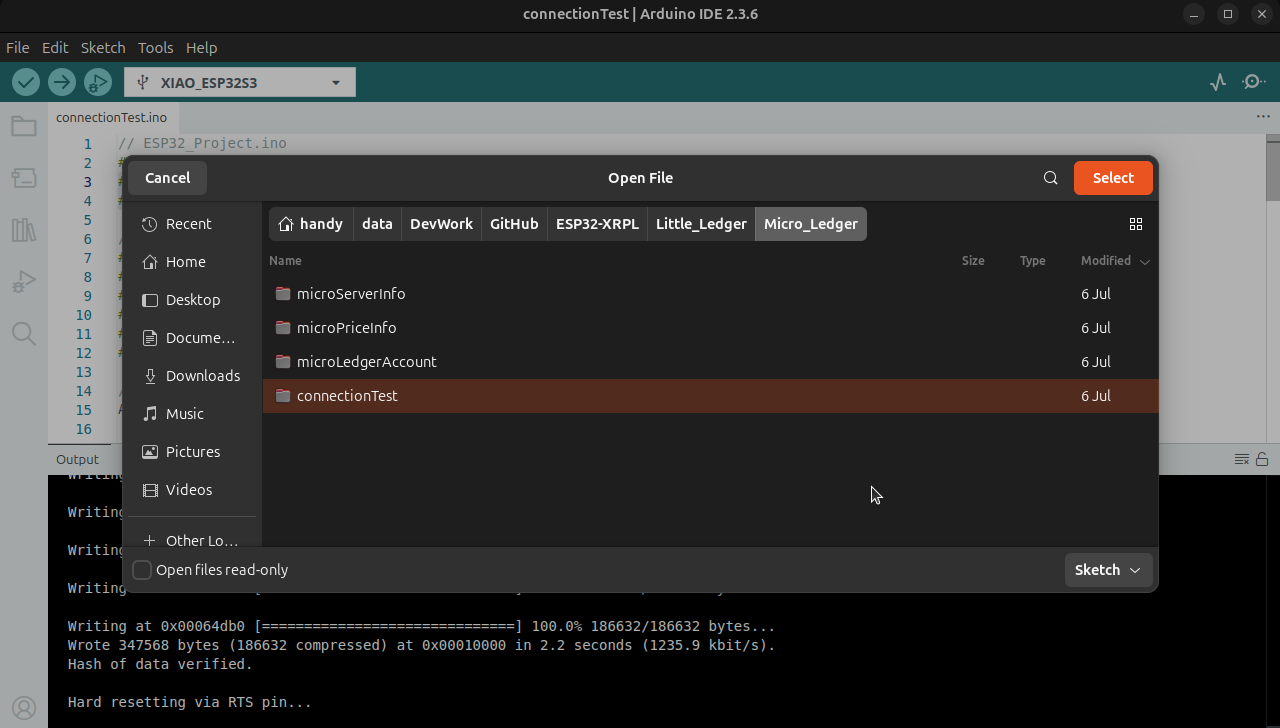
Step 1 : Clone the repository and open **connectionTest.ino**
### Clone the Repository
You can use the following command, download a Zip file or Clone our repository from GitHub
```
git clone https://github.com/Handy4ndy/ESP32-XRPL.git
```
* From the Arduino IDE, Navigate to Micro\_Ledger folder and load the ConnectionTest.ino file.
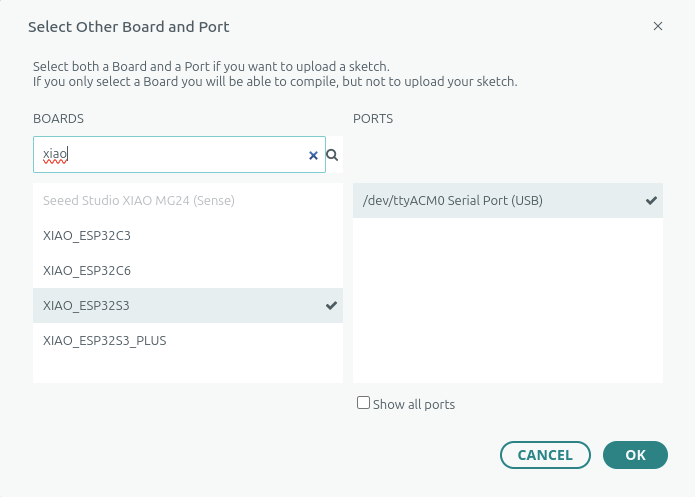
**Step 2: Assign Board XIAO ESP32S3 to your Port.**
Connect the Micro\_Ledger to your computer with a high-quality USB cable, open the Arduino IDE and select the "select other board and port" from the drop down next to the upload buttons (top left).
A window will appear allowing you to type in XIAO to assign the board to your port, If the ESP32 board is not appearing try a different USB cable and double check serial ports have been configured correctly.
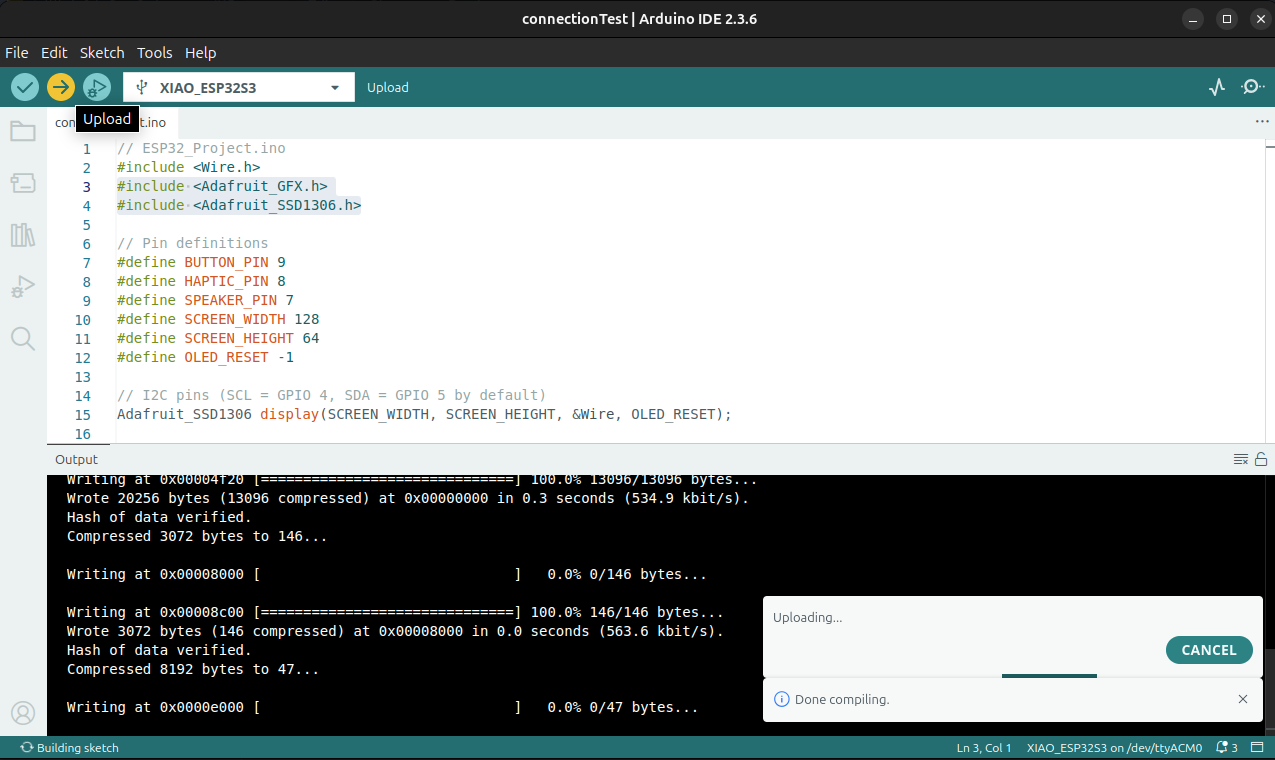
**Step 3: Upload the connectionTest.ino file**
Select Upload in the Arduino IDE to program the Micro\_Ledger
When the upload is complete you will be able to press the button on the bottom of the device to trigger the connection test, you should notice the message on the screen change, the vibration motor activate and the speaker play a sound.
If you have completed this test Congratulations your Micro\_Ledger is setup and you may proceed to the nexts steps to configure your device to receive transaction notifications, monitor your server or the latest price action with the XRP / RLUSD pair.
---
# Agent Instructions
This documentation is published with GitBook. GitBook is the documentation platform designed so that both humans and AI agents can read, navigate, and reason over technical content effectively. Learn more at gitbook.com.
## Querying This Documentation
If you need additional information that is not directly available in this page, you can query the documentation by asking a question.
Perform an HTTP GET request on the following URL with the `ask` and `goal` query parameters:
```
GET https://xspence.gitbook.io/little_ledger/getting-started/micro_ledger.md?ask=&goal=
```
`ask` is the immediate question: it should be specific, self-contained, and written in natural language.
`goal` is what the user is ultimately trying to achieve, the reason they need the answer. Sharing it helps GitBook give you a better, more relevant answer. A goal is most helpful when it describes the outcome the user wants rather than restating the question. For example, with `ask=how do I create an API token`, a goal like `automate deployments from our CI pipeline` lets GitBook tailor the answer to that use case.
The response will contain a direct answer to the question and relevant excerpts and sources from the documentation.
Use this mechanism when the answer is not explicitly present in the current page, you need clarification or additional context, or you want to retrieve related documentation sections.
.png?alt=media&token=7397cb8e-7356-4d14-a435-c9d919b57c44)